Language & Communication Development
More Than Cooking: Why We Love Adapted Recipes

Vicki Clarke
June 11, 2026


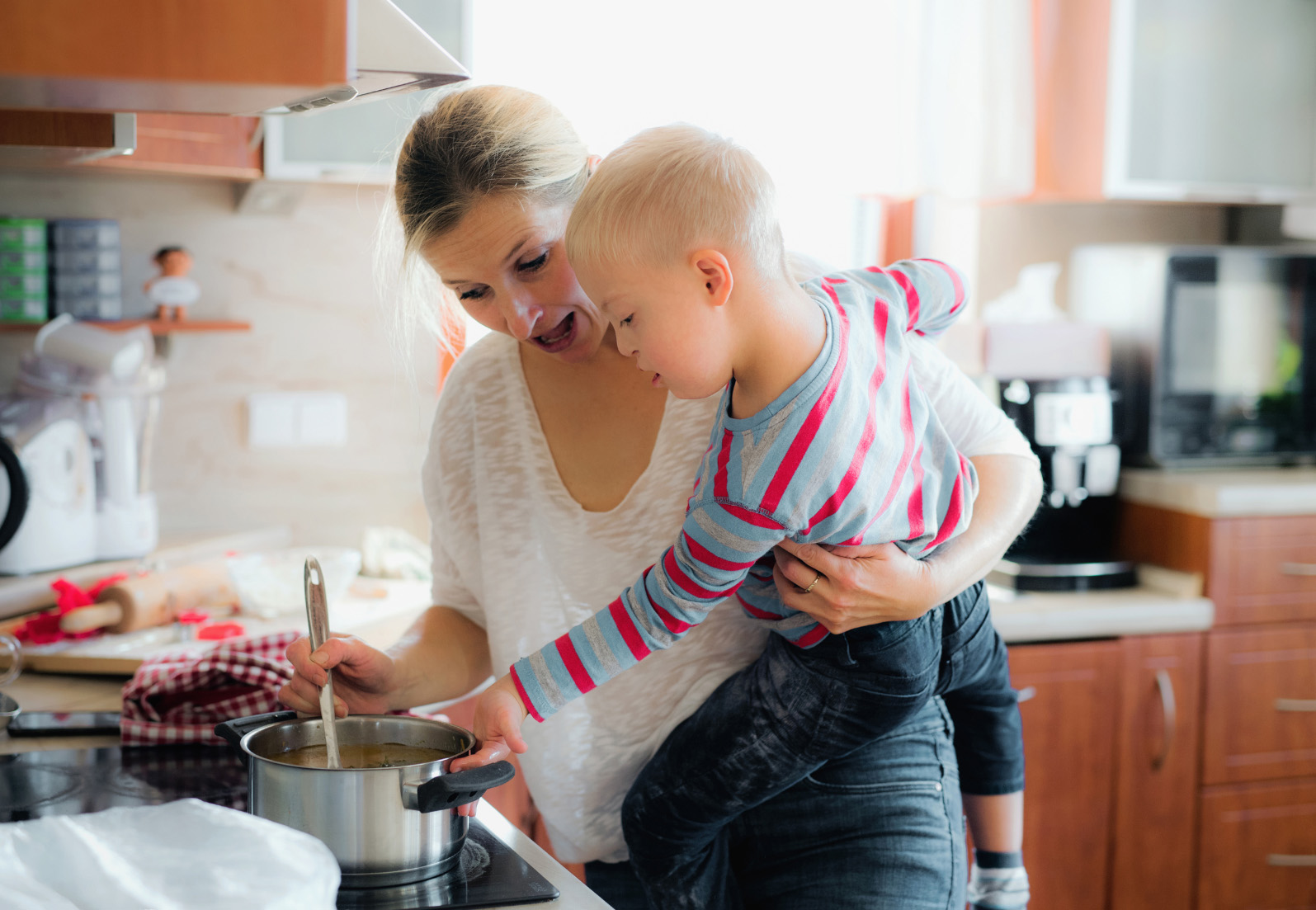
Over the years, adapted recipes have become some of our favorite resources to create.
At first glance, they might look like a fun cooking activity, and they certainly are that. Students are usually excited about food, they love getting their hands involved, and there is always a little extra motivation when there's something to taste at the end.
But adapted recipes can be so much more than cooking.
For many of our students, cooking activities provide opportunities to work on communication, literacy, science, social interaction, following directions, and independence—all within a single activity that feels meaningful and engaging.
And unlike many classroom activities, the end result is something real.

Traditional recipes can be challenging for many learners.
A student may know some sight words but not recognize ingredient names. They may be able to read a few words but struggle to understand a sequence of written directions. Others may have strong listening skills but need visual supports to stay organized and successful.
Adding photographs and visual supports helps bridge that gap.
Students can see the ingredients they need. They can see the materials required. They can see what each step should look like before they begin.
Instead of relying on an adult to tell them what to do next, they can begin to follow the recipe themselves.
That independence matters.
Sometimes we think of literacy as simply reading words on a page. For many of our students, literacy develops through repeated experiences connecting pictures, words, actions, and meaning. Adapted recipes give them an opportunity to do exactly that.
One thing we've learned is that different students need different kinds of cooking activities.
Some of our recipes are designed primarily for engagement, communication, and exploration. Our Core Word Recipes are meant to be fun. They often introduce students to seasonal foods, interesting ingredients, and new experiences. They create opportunities to model and use high-frequency core vocabulary while students are actively engaged in something they enjoy.
Sometimes the goal is trying a new food.
Sometimes the goal is learning a new word.
Sometimes the goal is simply participating with peers and having something meaningful to talk about.
Other recipes serve a different purpose.
Our Visual Recipe Cards were created with older students and young adults in mind. These recipes focus on functional cooking skills and independence. The directions are simple, highly visual, and designed to help students successfully prepare basic meals and snacks with minimal support.
For these learners, success may look like independently making a sandwich, preparing a snack after school, or following a recipe from start to finish.
Those are important skills.
The ability to prepare simple foods is something many families hope their children will be able to do independently one day. Visual Recipe Cards help build those skills one recipe at a time.
One of the things I love most about cooking activities is that communication doesn't have to be forced.
Students naturally have reasons to communicate.
They need ingredients. They need help. They make choices. They notice things. They react to smells and tastes. They ask questions. They share opinions.
Real communication opportunities are built right into the activity.
As speech-language pathologists and educators, we're often trying to create meaningful reasons for students to communicate. Cooking gives us those opportunities without much effort because the interaction is already there.

Many of our adapted recipes include activity communication boards.
These boards contain the ingredients, materials, and equipment used in the recipe along with 36 high-frequency core words that can be used across activities and settings.
The purpose isn't for students to use every word on the board.
The purpose is to make communication available and to make modeling easier for communication partners.
Teachers, therapists, paraprofessionals, and family members can naturally model words such as more, help, put, make, like, don't, go, and finished throughout the activity without interrupting the flow of what students are doing.
We also include conversation starters and partner engagement ideas because sometimes adults need support, too. A few simple prompts can turn a cooking activity into a rich language experience filled with comments, questions, opinions, and interaction.
Cooking also gives students opportunities to explore science concepts in ways that make sense.
They can predict what might happen when ingredients are mixed together. They can observe changes in texture, color, temperature, and appearance. They can compare, measure, test, and experiment.
Students may not realize they're learning science while they're making pudding or decorating cookies, but they absolutely are.
And because they're actively involved in the process, those lessons tend to stick.
Whether you're a teacher using adapted recipes in the classroom or a family cooking together at home, the real value isn't the snack that comes out at the end.
The value is in the participation.
It's in the communication that happens while making it.
It's in the confidence students gain when they complete a step independently.
It's in the new foods they try, the science they discover, the words they learn, and the conversations they have along the way.
The finished recipe is wonderful.
But the learning that happens during the process is where the real magic is.