Literacy and Communication
Using a Favorite Storybook to Teach More Than the Story: Embedding ELA Instruction for AAC Users

Vicki Clarke
August 10, 2026


One of the things we’ve been working on with our Storybook Companions is making sure they do more than give students a few activities to complete after reading a book.
We want the book to become the starting point for real ELA instruction.
A good example is our updated companion for I Got the School Spirit by Connie Schofield-Morrison. It’s a fun, familiar back-to-school story with lots of opportunities for students to talk about school, feelings, sounds, routines, and experiences. But instead of stopping at “Who was the story about?” or “Where did she go?”, we can use those same familiar story events to explicitly teach vocabulary, comprehension, phonological awareness, fluency, writing, and communication.
And we can do it without turning story time into a worksheet marathon.
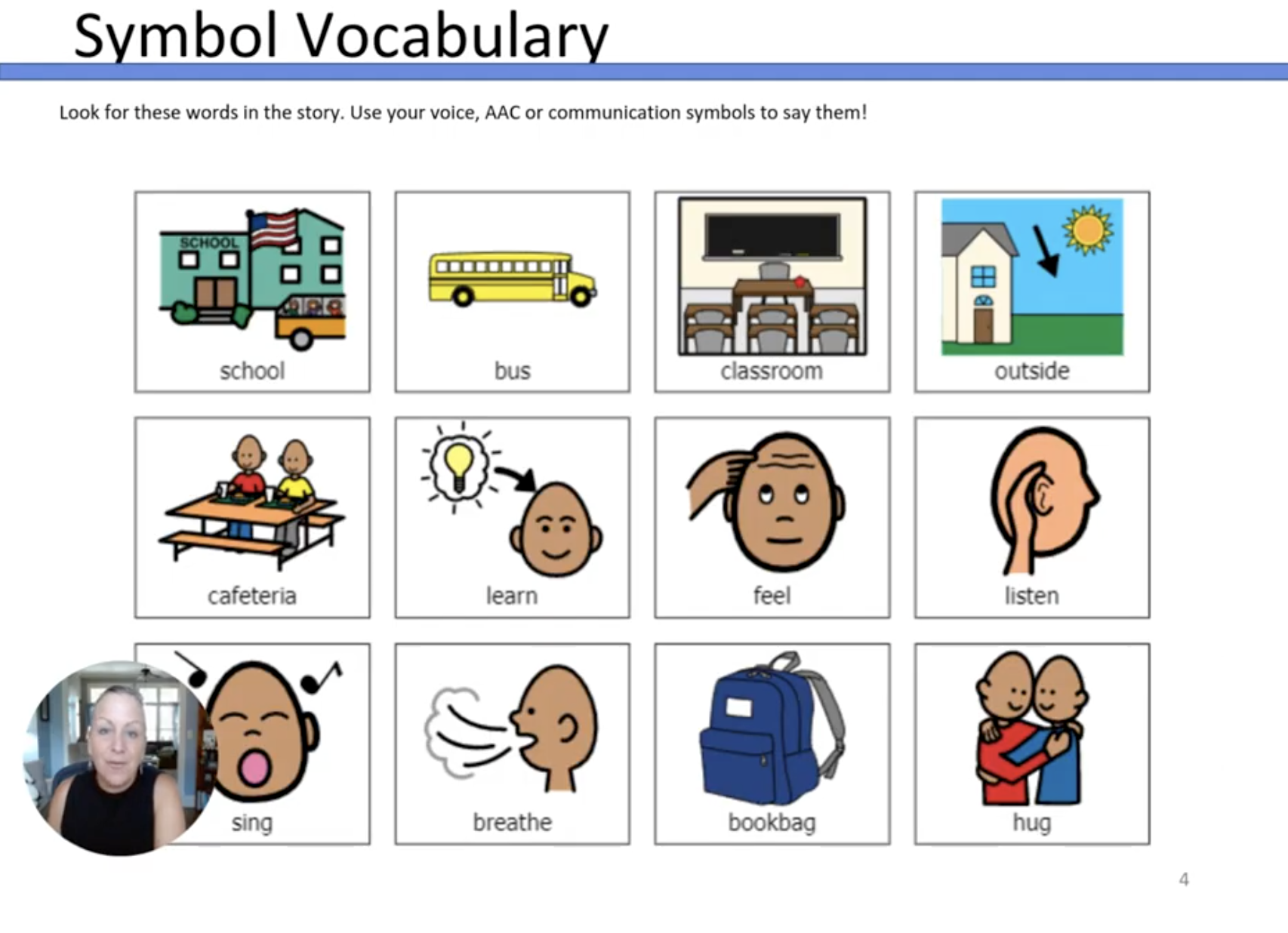
Before and during reading, we introduce words connected directly to the story, including words such as school, bus, classroom, cafeteria, book bag, listen, breathe, sing, learn, and hug.
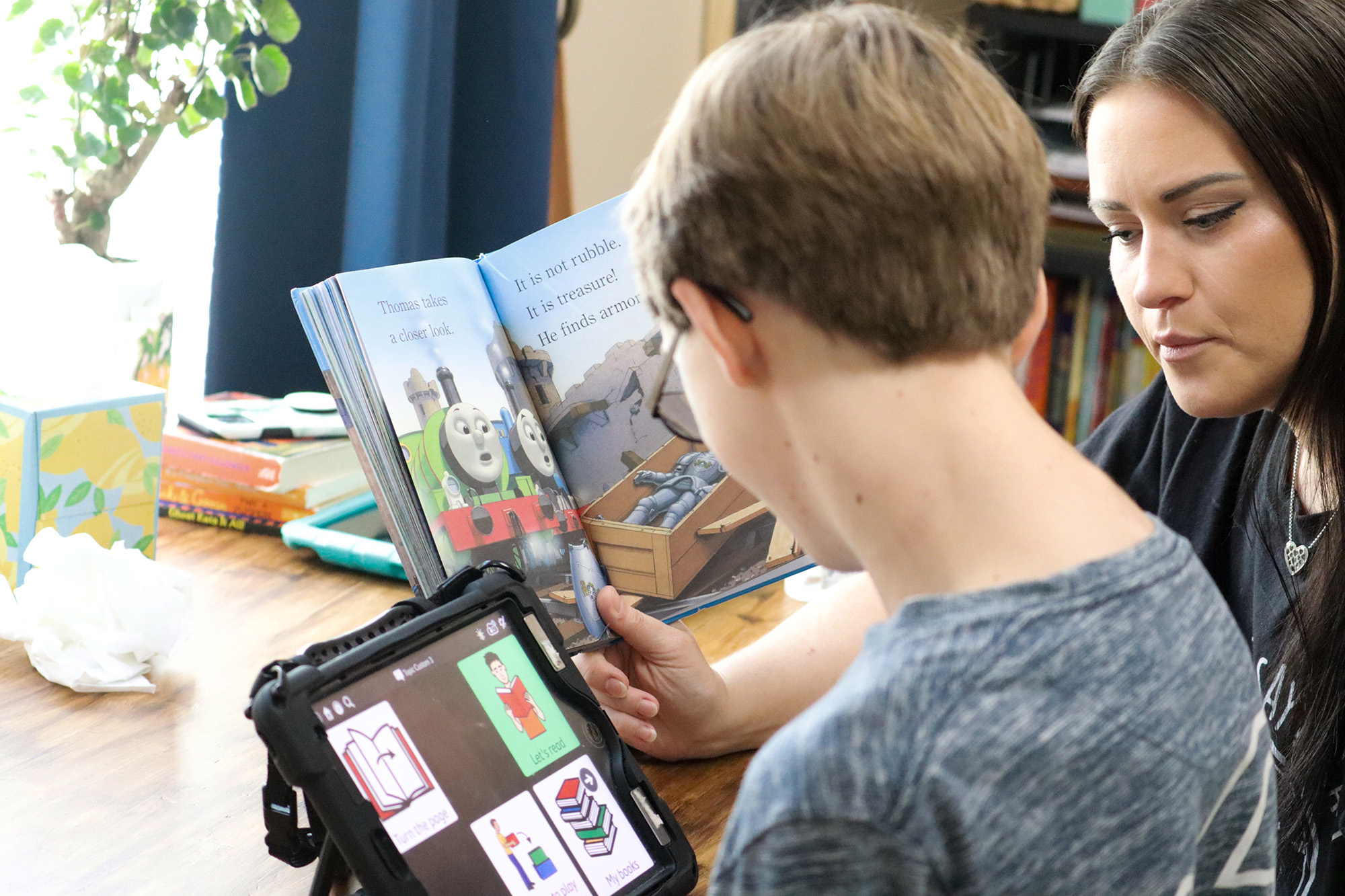
For students who benefit from visual support, those words can be paired with symbols or photographs. For AAC users, we can also locate the same vocabulary on their communication system.
The goal isn’t simply naming pictures. We want students to hear the word, see the word, connect it with meaning, and use it in context.
That same vocabulary then shows up again as we read, retell, sort, write, and talk about the story.
We also want to be intentional about comprehension.
For I Got the School Spirit, we might work on questions such as:
But not every student needs the same response format.
One student may choose between large picture choices. Another may select from several smaller visuals. Another may answer verbally, with AAC, or in writing.
The ELA target stays the same. The access to the target changes.
That distinction is really important for our students with complex communication and learning needs.
Story retell can also be much more concrete than asking, “Tell me what happened.”
We created characters, story items, and a simple school-day retell mat that moves from home, to the bus ride, to school. Students can physically move the girl, bus, backpack, school items, teacher, friends, and family through the story.
Some students may independently retell several events. Others may simply place the bus on the road while an adult models, “She goes to school.”
Both students are participating in narrative instruction.
Speech, AAC, pointing, gestures, facial expressions, sound effects, and moving the pieces all count as ways to participate.
This is probably one of my favorite parts of these updated sets.
We can take vocabulary and events students already know from the story and use them for explicit foundational ELA instruction.
For example, students can:
These are familiar activities, but there is a very specific instructional reason behind each one.
We’re connecting spoken language, print, sounds, pictures, and meaning over and over again.
We’ve also built in adapted fluency practice using short, repeatable lines from the story experience.
Students can touch one dot for each word as the sentence is read. Speaking students can use the dots for pacing. AAC users can touch each word, participate using their communication system, or have the entire line programmed onto a single-message switch.
That means everyone can participate in repeated reading.
For shared writing, we use a predictable frame:
At school I can ____________.
Students might contribute learn, read, play, sing, help, or have fun.
Again, the student can contribute that idea through speech, AAC, symbols, photographs, or another response mode. The adult does the writing, but the student is the author.
This is the piece we don’t want to lose.
These activities aren’t really meant to be handed to a student and completed independently from beginning to end.
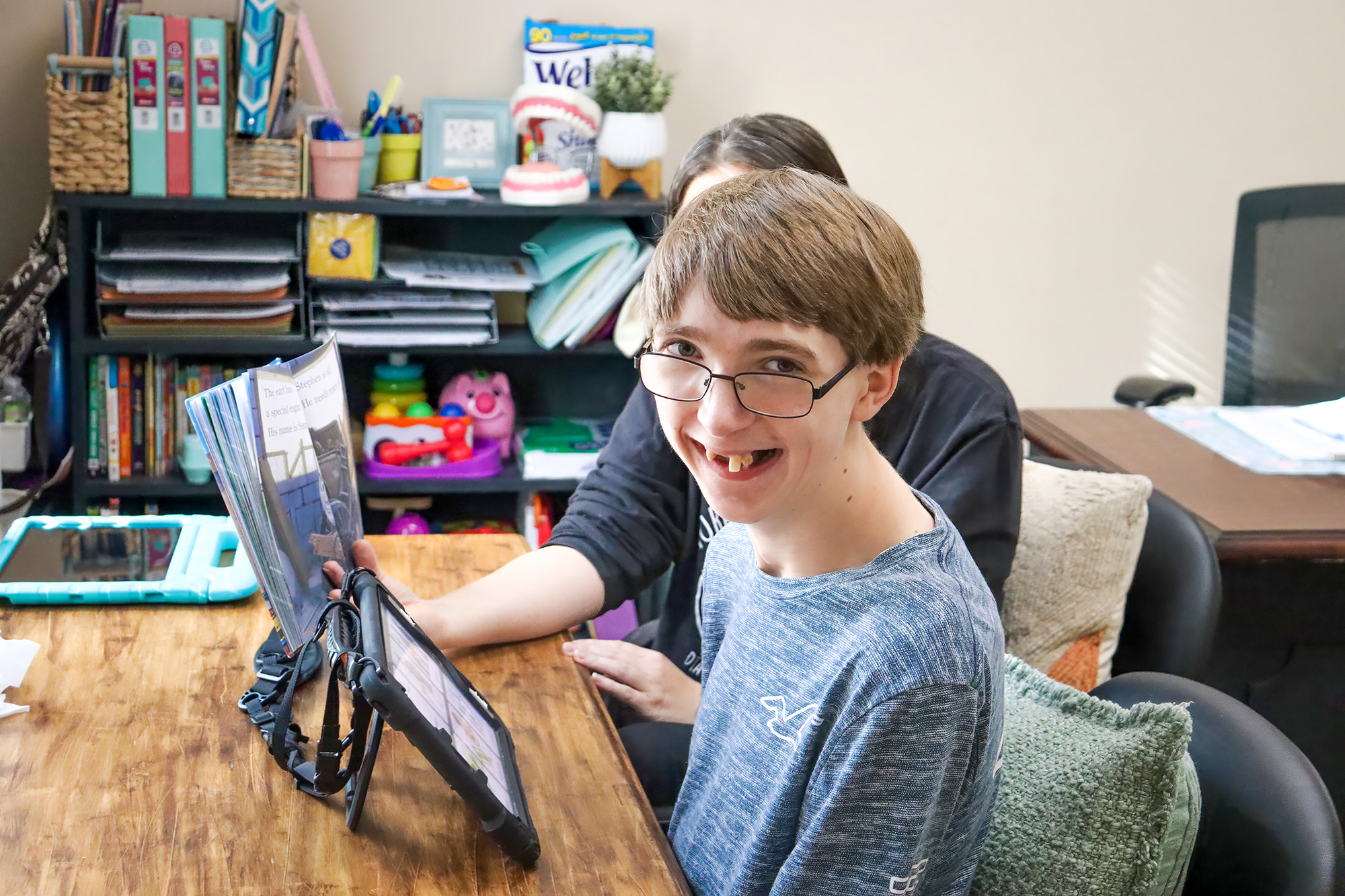
We want adults sitting beside students, talking about the book, modeling AAC, pointing to words, waiting for responses, commenting, asking questions, and responding to what the student communicates.
That’s why we’ve added AAC partner guides, core word targets, and conversational scripts connected directly to moments in the story.
A literacy lesson gives us so many reasons to communicate:
“I feel excited.”
“Here comes the bus!”
“I can help.”
“Take a breath.”
“That was fun!”
Those interactions are not something extra that happens after the ELA lesson.
They are part of the ELA lesson.
Popular children’s books give us something incredibly useful: a shared context.
Students know the characters. They can see what is happening. The language repeats. The pictures provide meaning. And after multiple readings, the story becomes increasingly predictable.
That gives us a wonderful foundation for explicit instruction.
We can take one familiar book and intentionally teach vocabulary, comprehension, sequencing, narrative language, phonological awareness, print awareness, fluency, writing, and communication—while still keeping story time fun and meaningful.
That’s really what we’re aiming for with these updated Storybook Companions.
Not more worksheets.
More opportunities to read, think, learn, and communicate together.