AAC Apps, Equipment & Tools
3 Reasons Why ABC Books Are a Big Deal

Stephanie Ekis
March 11, 2026


ABC books might seem like something simple or old-fashionedin our screen-filled world, but don’t let that fool you! These important picture books are quietly doing some serious heavy lifting when it comes to early literacy development for our students. With each page bursting with bright pictures and big, bold letters, ABC books can also be used to build vocabulary, support language development, and encourage imagination. Here are three reasons why ABC books deserve a starring role on every bookshelf.
Before a child learns to read, they first need to recognize that written language is made up of individual letters — and that each letter has its own unique shape and name. This is called alphabet knowledge, and it’s one of the strongest predictors of reading success down the road.
ABC books make learning the alphabet feel completely naturaland fun. Each page gives students one letter to focus on, often paired with a familiar image — “A is for Apple,” “B is for Bear.” This repetition helps brains form strong mental connections between the visual form of a letter and its name.Even better, when you read an ABC book together, you’re giving students a chance to point, trace, and talk about letters in a low-pressure, joyful setting. Over time, those 26 shapes stop being random squiggles and start becoming recognizable letters.
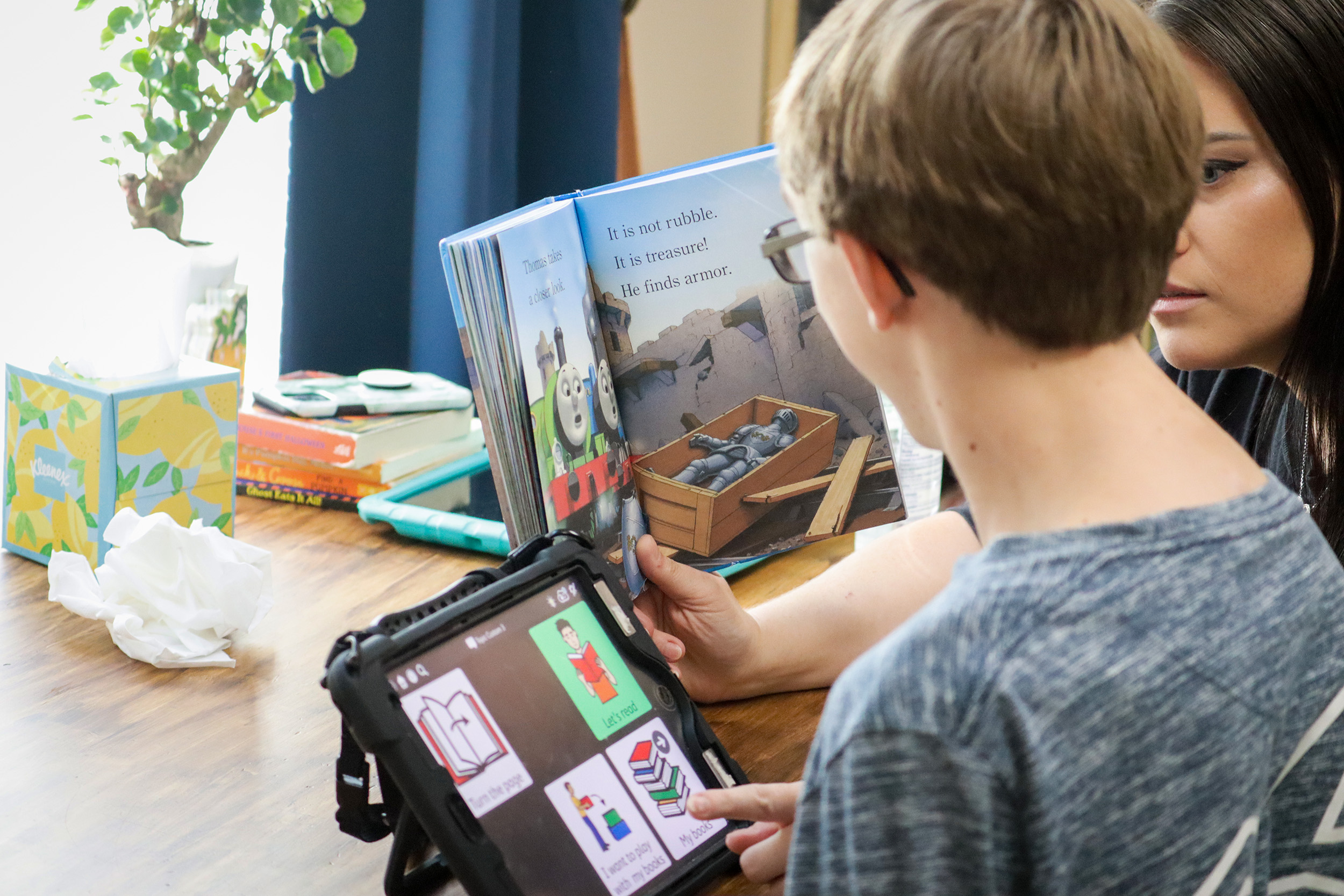
AAC Tip: All robust AAC communication software (e.g., TD Snap, LAMP, TouchChat, Avaz, etc) has a built-in keyboard. As you read ABC books, make sure that students have access to the keyboards on their individual communication system. If students don’t have access to an AAC system, print out an alphabet board. Low-tech works too!
It sounds technical, but phonological awareness simply means the ability to hear and play with the sounds in spoken language — things like rhymes, syllables, and individual sounds (called phonemes). ABC books are fantastic tools for building this skill because they naturally draw attention to the sounds that letters make, not just their names. A good ABC book doesn’t just say “C is for Cat” — it gives students the chance to hear that crisp /k/ sound at the start of a word, over and over again, in a meaningful context.
When you read aloud and linger on beginning sounds or ask “What other things start with the /b/ sound?” — you’re actively training the student’s ear to notice sound patterns. This is hugely important, because reading isn’t just about recognizing letters; it’s about mapping those letters onto sounds. Children who develop strong phonological awareness early tend to crack the reading code much more easily when formal instruction begins.
AAC Tip: Use word lists or word groups to find other words that start with the focus sound. For example, if you are exploring the /b/ sound, go to different categories of words to find things that start with the same sound (e.g., Food – banana; Animals – bear; Clothing – baseball hat, Toys - blocks).
ABC books are genuinely fun and can be created about any topic. Learning to read involves a lot of challenges and effort. If a child’s earliest experiences with books and letters are fun and interesting, they develop something researchers call print motivation — a genuine desire to engage with books and reading. This type of motivation can carry them through the harder work ahead.
ABC books also invite interaction. You can sing the alphabet together, play “I Spy” with the pictures, make silly sounds, or clap for each letter. They’re the kind of books that get read again and again — which is perfect, because repetition is exactly how our students learn. Every re-read of a favorite ABC book deepens letter recognition, sound awareness, and vocabulary all at once. When books feel like a treat rather than a task, studentsgrow up seeing themselves as readers. And that identity — “I’m someone who loves books” — is one of the greatest gifts you can give to our students.
AAC Tip: Lean into student interests by working together to help them write their own ABC books. You can also find free ABC books at www.monarchreader.com and ABC read aloud books on www.youtube.com.