Teaching Tools & Strategies
Object Schedules: Building Understanding and Communication Through Everyday Routines

Vicki Clarke
October 30, 2026


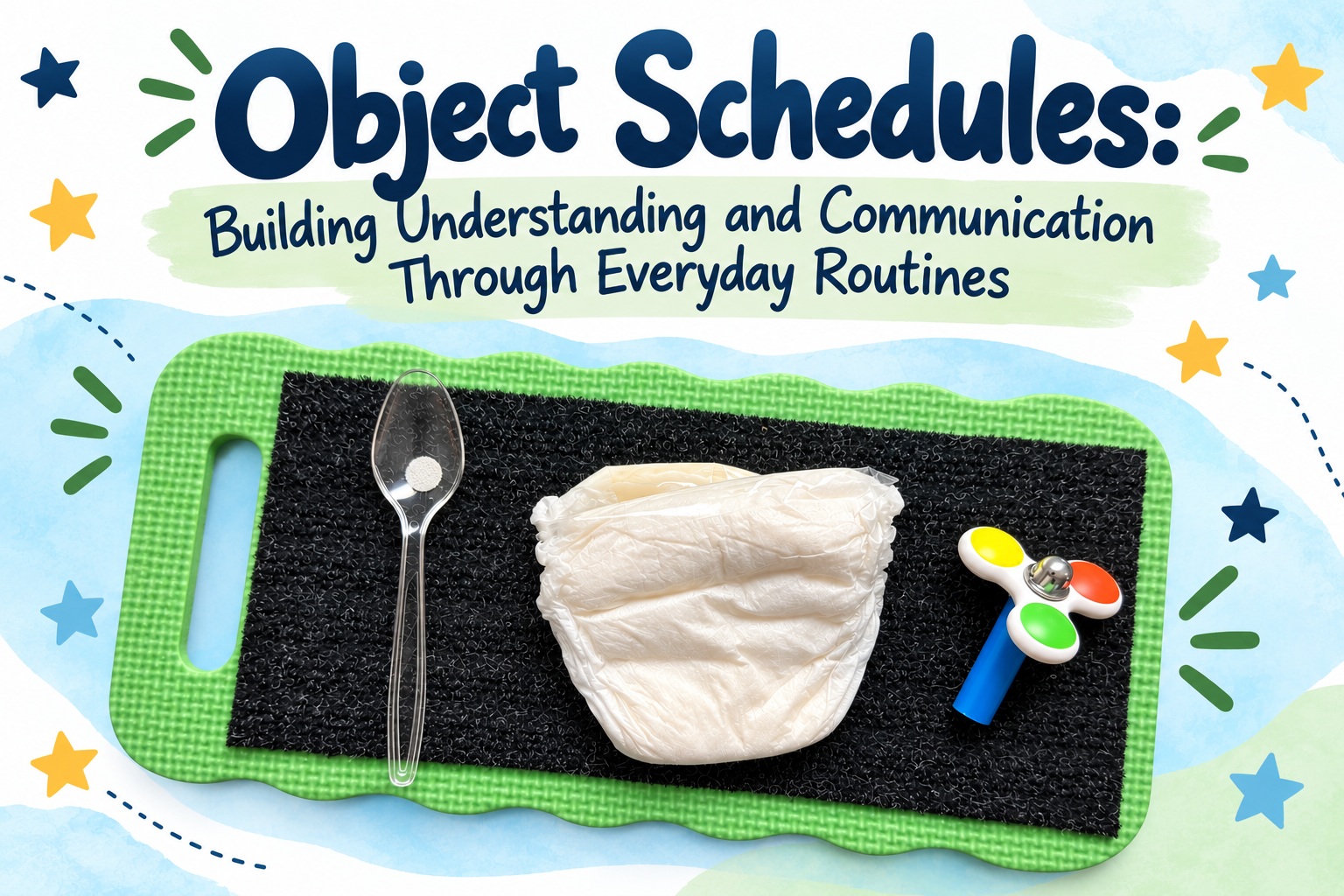
For students with visual impairments and complex communication needs, understanding what is happening throughout the school day can be challenging. We often rely on pictures, written schedules, and visual cues to help students anticipate activities. But what happens when those visual supports aren't accessible?
Object schedules offer a simple, meaningful alternative!
An object schedule uses familiar objects or pieces of objects to represent activities throughout the day.
When we consistently pair an object with a familiar routine, students can begin to understand that the object represents something that is about to happen.
For example, presenting an object associated with a favorite movement activity before starting that activity helps the student begin to anticipate what's coming next.
This can support:
The goal isn't just to help students follow a schedule. We want to help them develop the understanding that objects can carry meaning and can be used to communicate.
This is probably the most important part of creating an object schedule!
We need to select objects that have meaning from the student's perspective, not just ours.
It's easy to choose an object because it visually reminds us of an activity. But that doesn't mean it will have meaning for a student with a visual impairment.
Instead, think about what the student actually experiences during the routine.
For example:
The object should share a meaningful characteristic with the actual activity. That might be its texture, shape, movement, or another sensory feature the student experiences.
Whenever possible, begin with objects the student already recognizes through direct experience.
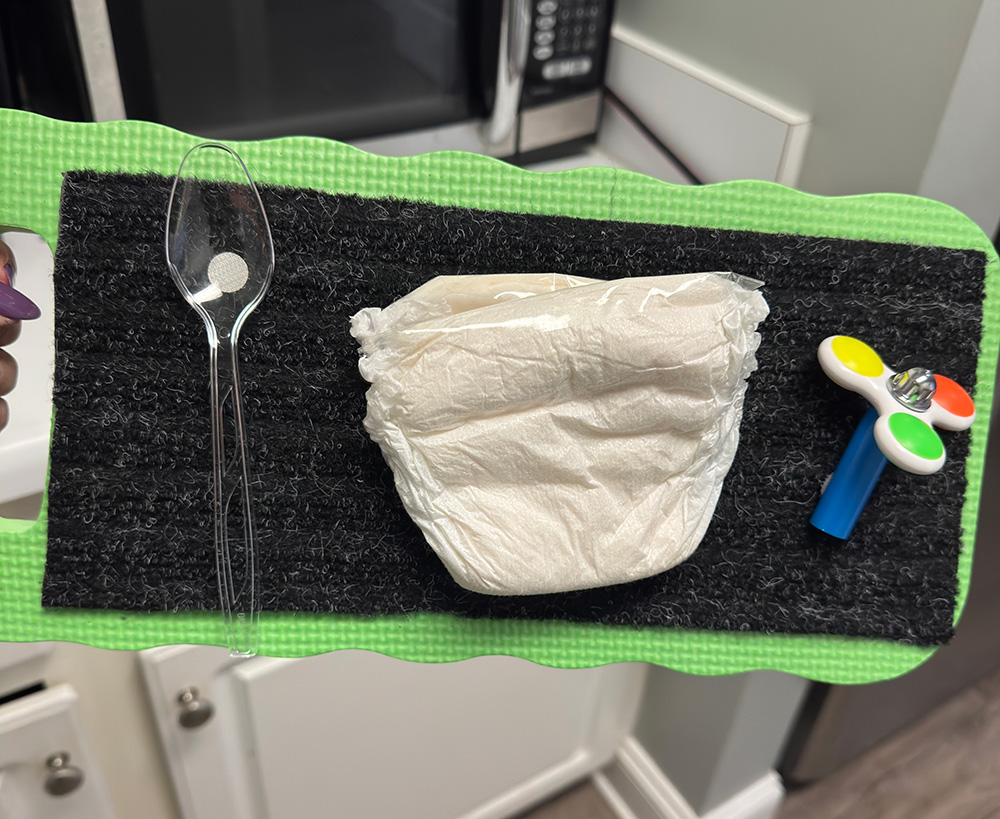
We created this simple schedule using materials available at Dollar Tree and Walmart.
Materials:
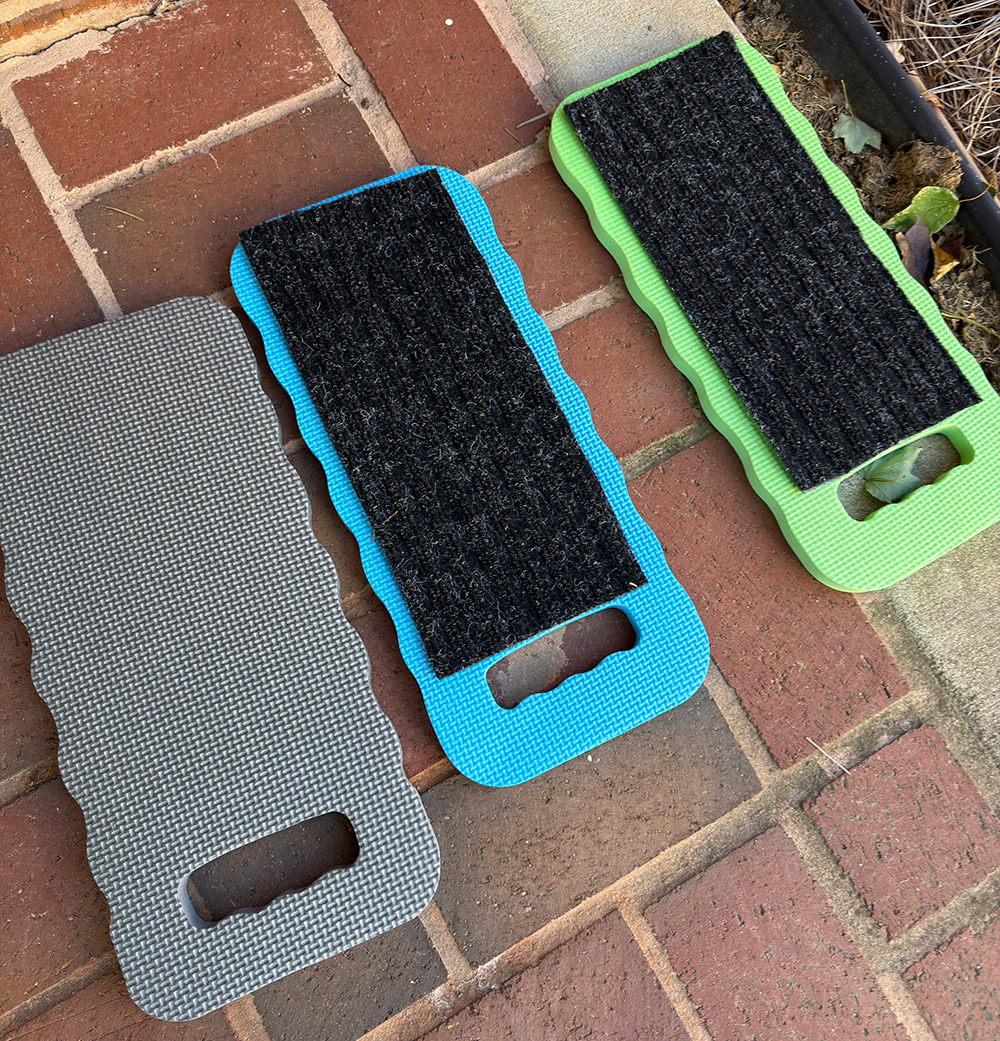
Attach the mat material to the foam kneeling pads using permanent spray adhesive or hot glue. The textured surface provides a place to attach the objects with small pieces of Velcro.
Make sure everything is securely attached, with no sharp edges or small detachable pieces that could present a safety concern.
The result is a lightweight, inexpensive, tactile schedule that can be customized for an individual student's activities and access needs.
Simply placing objects on a schedule doesn't automatically make them meaningful.
The learning happens through repeated, consistent experiences.
Start with one or two familiar routines. Present the object immediately before the activity, allow the student time to explore it, and then move into the actual experience.
Use the same object consistently for that activity, and make sure the student has opportunities to interact with the object and the activity it represents.
As the student begins to recognize these associations, we can gradually introduce additional objects and opportunities to make choices.
For example, a student who recognizes the object associated with a favorite movement activity may eventually use that object to request the activity.
That's an exciting transition—from understanding what an object means to using that object to express a message!
Remember that students develop symbolic understanding at different rates. Some may initially respond to objects as familiar cues rather than as independent symbols. Our job is to provide meaningful experiences, observe their responses, and build on their understanding.
One of our favorite things about AAC implementation is that effective communication supports don't always require expensive equipment.
With a few inexpensive materials and careful attention to how a student experiences the world, we can create tools that support anticipation, participation, and emerging communication.
It's not really about the objects themselves. It's about the meaning we help students build through everyday experiences.


