AAC Apps, Equipment & Tools
The New AAC System Has Arrived! Does Everyone Know How to Use It?

Vicki Clarke
October 20, 2026


Getting a new AAC system is exciting! After all the evaluations, paperwork, and waiting, our student finally has access to a robust communication system. Now what?
Of course, we want to help our student learn to communicate with their new system. But first, we need to make sure the people supporting them know how to use it, too!
Communication partners need to understand how the vocabulary is organized, where to find words and messages, and how to personalize the system without disrupting its organization.
Think about learning your way around a new neighborhood. At first, you need directions to find the grocery store, library, or your favorite coffee shop. But after traveling those routes a few times, you start to remember where everything is.
AAC is a lot like that!
Most robust AAC programs have a carefully designed organizational system. Words may be grouped by categories, parts of speech, communication functions, or predictable motor patterns.
There’s a reason those words are where they are!
When communication partners understand the organization, they don’t have to memorize every word. Instead, they learn how to FIND words and messages independently.
That makes it much easier to model language throughout the day, whether they’re helping a student ask a question, tell a story, protest, or share something exciting!
We also want everyone to understand where and how to add personal vocabulary.
Names of family members, friends, and pets. Favorite activities, special places, and important messages. These are the words that make an AAC system meaningful to our students.
But adding vocabulary shouldn’t mean rearranging the entire system!
Consistent word locations and predictable navigation help students learn where vocabulary is located. Over time, this familiarity can support more efficient communication and increasingly complex language.
Imagine learning to type on a keyboard when someone keeps moving the letters around!
We want to add meaningful vocabulary while protecting the organization that supports long-term language development.
Before adding a new word, check to see whether it’s already there. Then use the program’s designated locations for personal vocabulary whenever possible. And make sure the team knows what’s been added!
At DTA Schools, we use our AAC App Cheat Sheets when introducing a student’s new communication system to school teams and families.
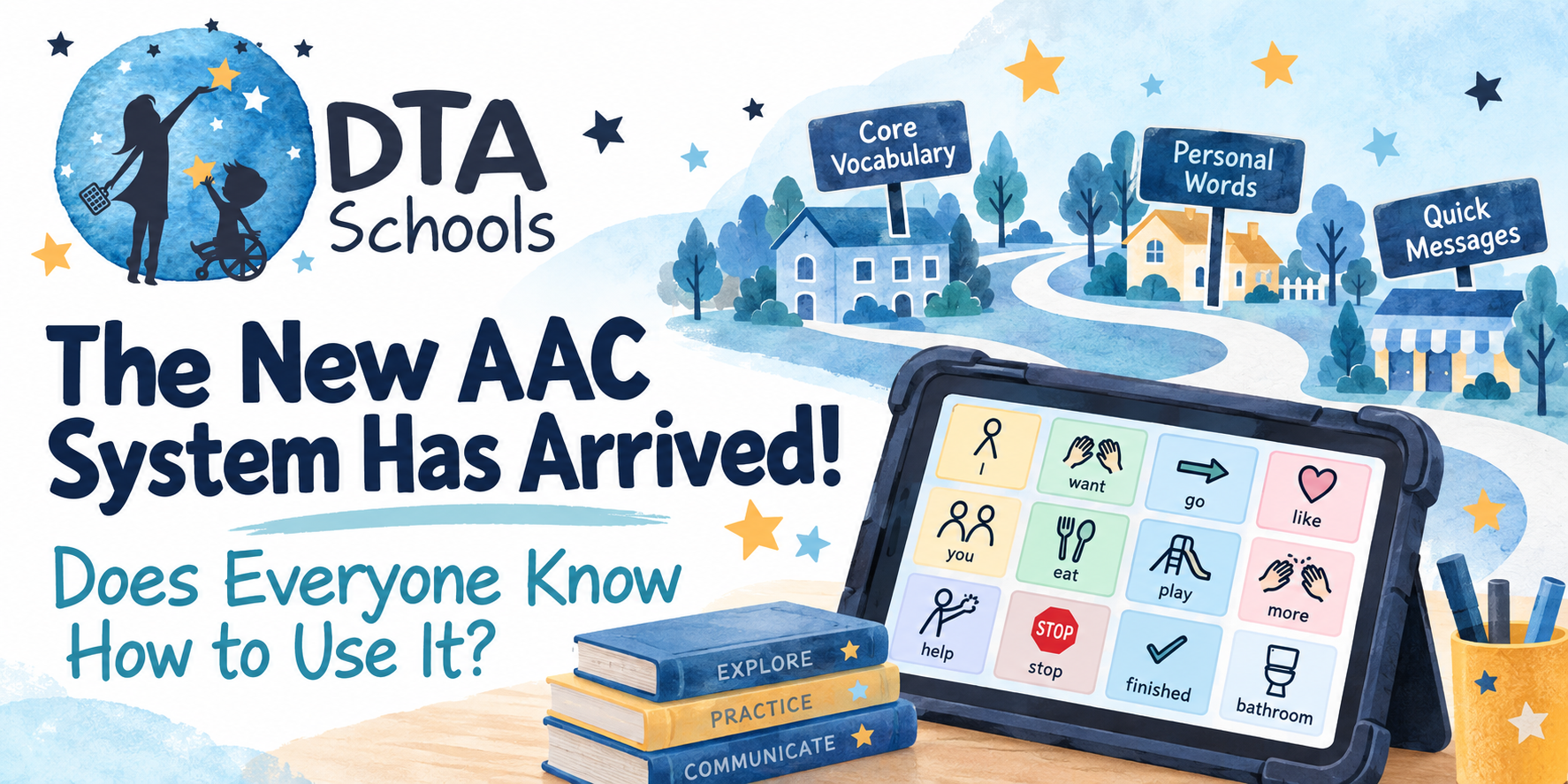
These simple visual guides highlight the basic organization of each program, including where to find core vocabulary, personal words, quick messages, and other important features.
During our initial training, we use the cheat sheets to guide a little hands-on exploration. We practice finding common words, navigating between pages, locating messages for different communication purposes, and identifying where to add personalized vocabulary.
Then we share the guides with teachers, paraprofessionals, therapists, and families so they have a quick reference when we’re not there.
Our current cheat sheets include:
We’re also developing guides for Grid 3 Voco Chat and Super Core!
Nobody needs to become an AAC expert on the first day. We can start with a few useful words and messages, practice finding them, and then use them during everyday activities.
But we do want every communication partner to feel comfortable exploring the system independently, rather than waiting for the SLP to find or add every word.
And don’t forget families! The same words and messages we’re modeling at school can be used during meals, play, conversations, and daily routines at home.
Learning where the words are is only the beginning. The real goal is helping communication partners use the system naturally to model language, respond to our students, and create meaningful communication opportunities throughout the day.
A new AAC system gives our students access to language. Helping everyone around them learn to use it gives them more opportunities to communicate!