AAC in the Classroom
Teaching Science, Building Voices: AAC Opportunities in Every Experiment

Stephanie Ekis
September 9, 2026


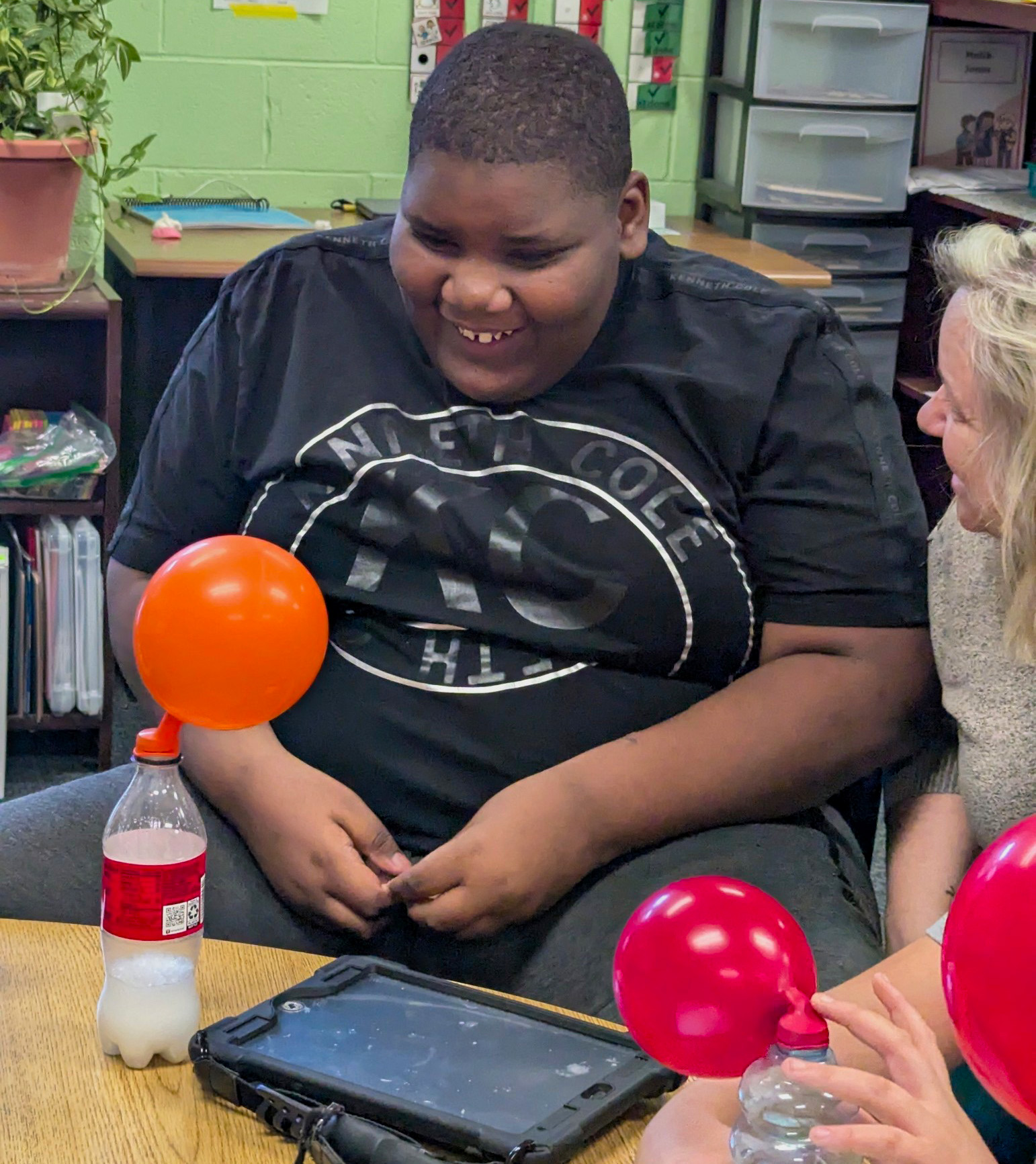
Science class offers a uniquely rich opportunity for language learning. Science experiments are active, sensory, and filled with curiosity. Students watch objects move, change, float, sink, melt, or transform. They make predictions, react to surprises, and share discoveries with peers. When communication boards are embedded into these experiences, science becomes not just an academic lesson but an engaging and fun communication event.
At DTA, our science experiments are intentionally designed with AAC learners in mind. Each activity is built around clear, step-by-step visuals that guide students through the process. These visuals reduce cognitive load and make the sequence predictable, freeing students to focus on communicating rather than trying to remember what comes next. The structure invites participation from all learners, whether they are using speech, gestures, simple talking switches, or high-tech AAC systems.
A feature of these experiments is their core word focus. Each activity highlights a small set of powerful, high-frequency words—words like put, in, up, down, help, go, and stop. These words appear naturally throughout the experiment, woven into the actions students take and the observations they make. Because they are used repeatedly and in meaningful contexts, students have multiple opportunities to hear them, see them, and use them. Over time, these core words become a part of their everyday vocabulary.
Another powerful feature of the DTA science experiments are the partner prompts. Included with each experiment, these tips help teachers, paraprofessionals, and therapists know what to model and how to support communication throughout the activity. Instead of guessing what to say or how to scaffold language, partners are guided to model core words, expand student responses, encourage predictions, and invite comments. The prompts transform staff into confident AAC communication partners who understand how to keep language flowing from start to finish.
Communication boards play a central role in this process. Each board includes a blend of core vocabulary, action words, describing words, question words, and experiment-specific nouns. Students can point to words to make predictions, describe what they see, ask for help, or share their reactions. Because the boards are accessible throughout the activity, students never have to wait for language—they have it right in front of them, ready to use. For students using dedicated AAC devices, the communication boards become an additional tool to support learning and participation.
The beauty of embedding AAC into science experiments is that the learning extends far beyond the activity itself. Students practice essential communication skills such as turn-taking, joint attention, commenting, and asking/answering questions. They learn to describe observations, compare results, and retell steps using procedural language. They build confidence as their ideas are heard and valued. And because many of the experiments connect to thematic units from our All Year Core & More curriculum, students encounter familiar vocabulary across multiple subjects, deepening their understanding and strengthening their expressive skills.
These experiments show that AAC learning doesn’t require a separate lesson or a special block of time. Communication can be embedded into any routine—science, cooking, art, morning meeting, sensory play, or transitions. When AAC is accessible and partners are modeling, every moment of the day can become an opportunity for students to participate meaningfully.
Science experiments invite curiosity, spark conversation, and create shared experiences that bring students together. With communication boards at the center, students who use AAC don’t just watch the experiment unfold—they lead it, talk about it, and learn from it. And in doing so, they show us what inclusive education looks like when communication is truly for everyone.
Check out our science experiments on the DTA School Resources and Materials website or on Teachers Pay Teachers.