AAC Resources
October Is AAC Awareness Month: Building Partner Skills and Planning for Real Impact

Stephanie Ekis
October 6, 2026


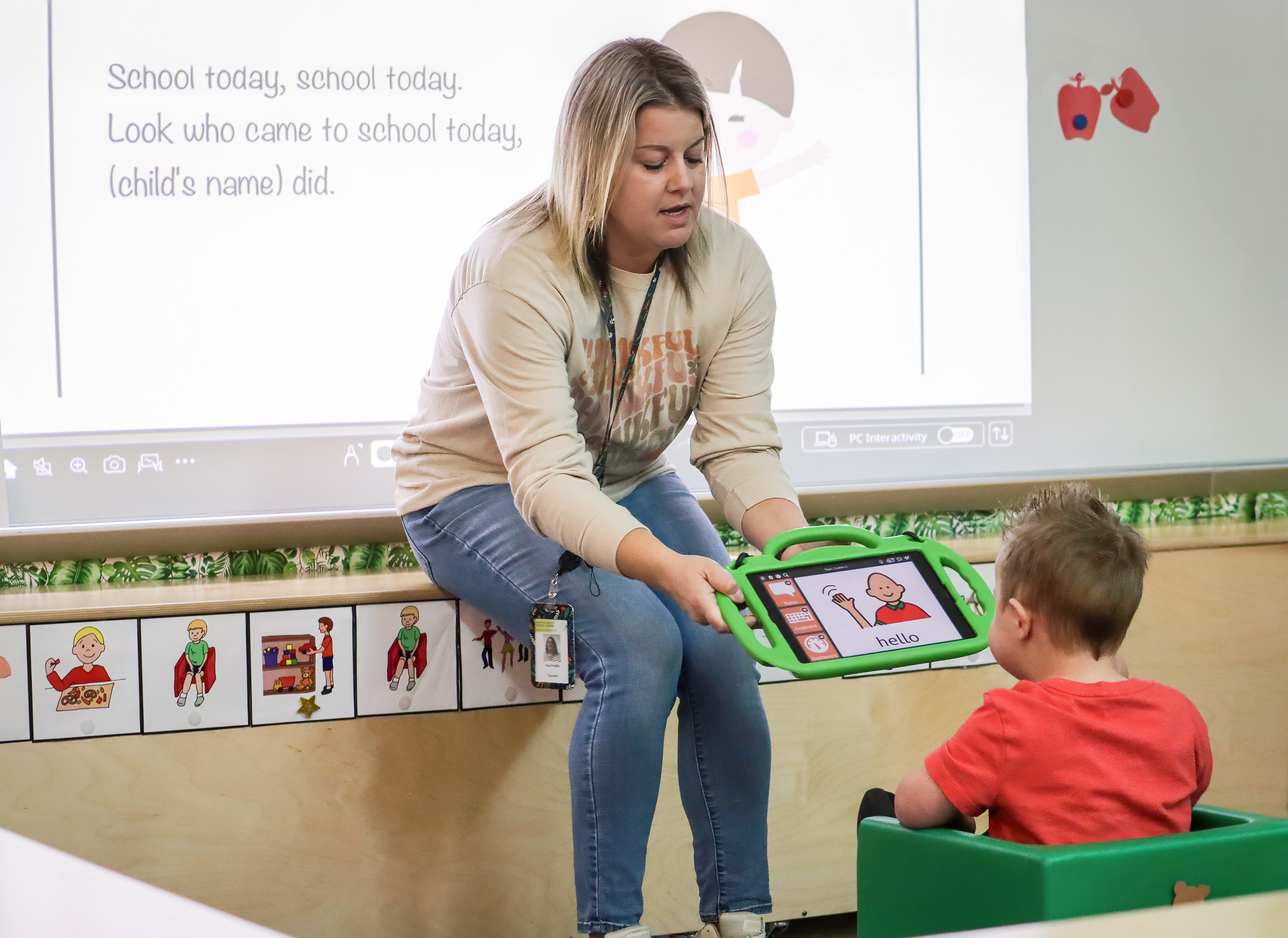
In our last blog post, we celebrated the start of AAC Awareness Month by talking about moving beyond basic awareness toward practical, everyday access. Having an AAC device, communication board, or app available in the classroom is an essential first step—but access alone doesn't create communication.
To build an environment where students with complex communication needs truly thrive, school teams must be intentional about what happens after the device is on the table. That intentionality relies on two critical components: strong partner skills and thoughtful planning.
An AAC system is only as effective as the environment surrounding it. Because communication is a two-way street, adults in the classroom—teachers, speech-language pathologists, and paraeducators—play a massive role in shaping how often and how successfully a student uses their voice.
Being an effective communication partner isn't about talking foror testing (e.g., “Touch the…”); it's about creating authentic opportunities for students to connect through communication. Key partner skills include:
• Aided Language Input (Modeling): Pointing to core words on the student's board or device while speaking naturally. Students need to see how their system works in real time before they can be expected to use it independently.
Tip: If you struggle with knowing what words to model, check out the Reading Reminders, Tips and Partner Prompts available in our All-Year Core and More Supplemental Books.
• Pausing and Waiting: Expectant silence is powerful. Giving a student 10 to 15 seconds of wait time provides them withthe processing space they need to process, compose a thought, and navigate their system.
• Responding to All Intentional Communication: Validating every communication attempt—whether it's a touch on a screen, a vocalization, or a glance at a picture—shows the student that their message has power.
• Attributing Meaning: Treating accidental presses or emerging communication as deliberate interactions helps students learn cause and effect in a safe, supportive setting.
When whole classroom teams adopt these partner habits, AAC transforms from a "therapy tool" into a natural language medium used throughout the day.
Partner skills thrive best when backed by planning. Without an intentional plan, even the best communication partners can struggle to find moments for AAC instruction amidst a busy school day.
Planning for AAC doesn't mean creating a separate curriculum; it means embedding communication supports directly into existing routines, academics, and social moments:
1. Identify the Vocabulary Demand: Look ahead at upcoming academic lessons, literacy units, or social routines (like snack time or science experiments). What core and fringe words will allow the student to comment, ask questions, or make choices?
DTA Resource Idea: Use the DTA AAC Recipes for Success Lesson Planning worksheet to help identifyfocus core and fringe words!
2. Script the Adult Support: Decide ahead of time who will model which targeted words during a specific activity. When paraeducators and teachers have clear targets, modeling becomes seamless rather than overwhelming.
3. Design Opportunities for High-Frequency Practice: Plan multiple chances across the morning and afternoon for the student to use the same target words in different contexts.
DTA Resource Idea: Use the DTA Routine Target Planner and Guide to determine the vocabulary targets to embed into each of your regularly scheduled school activities.
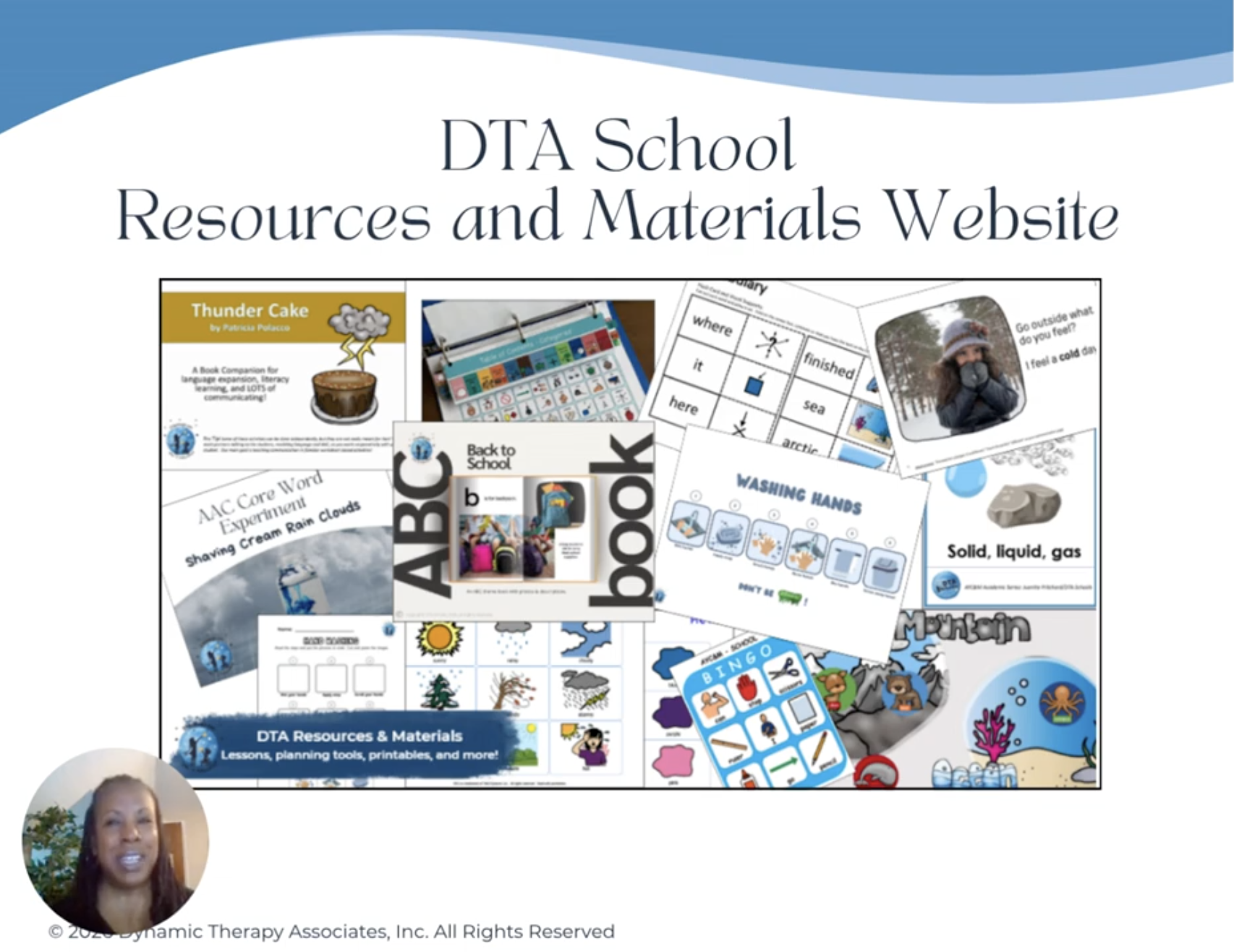
Developing partner skills and mapping out intentional lessons takes effort, but classroom teams don't have to start from scratch. The DTA Schools Resources & Materials website is specifically built to relieve the planning burden by offering ready-to-use activities and targeted supports. From fully adapted picture book kits and core word recipe activities to visual supports and quick partner cheat sheets, our platform gives SLPs, teachers, and support staff the exact tools they need to drive language and literacy growth for students with complex communication needs—straight out of the box and ready for Monday morning.
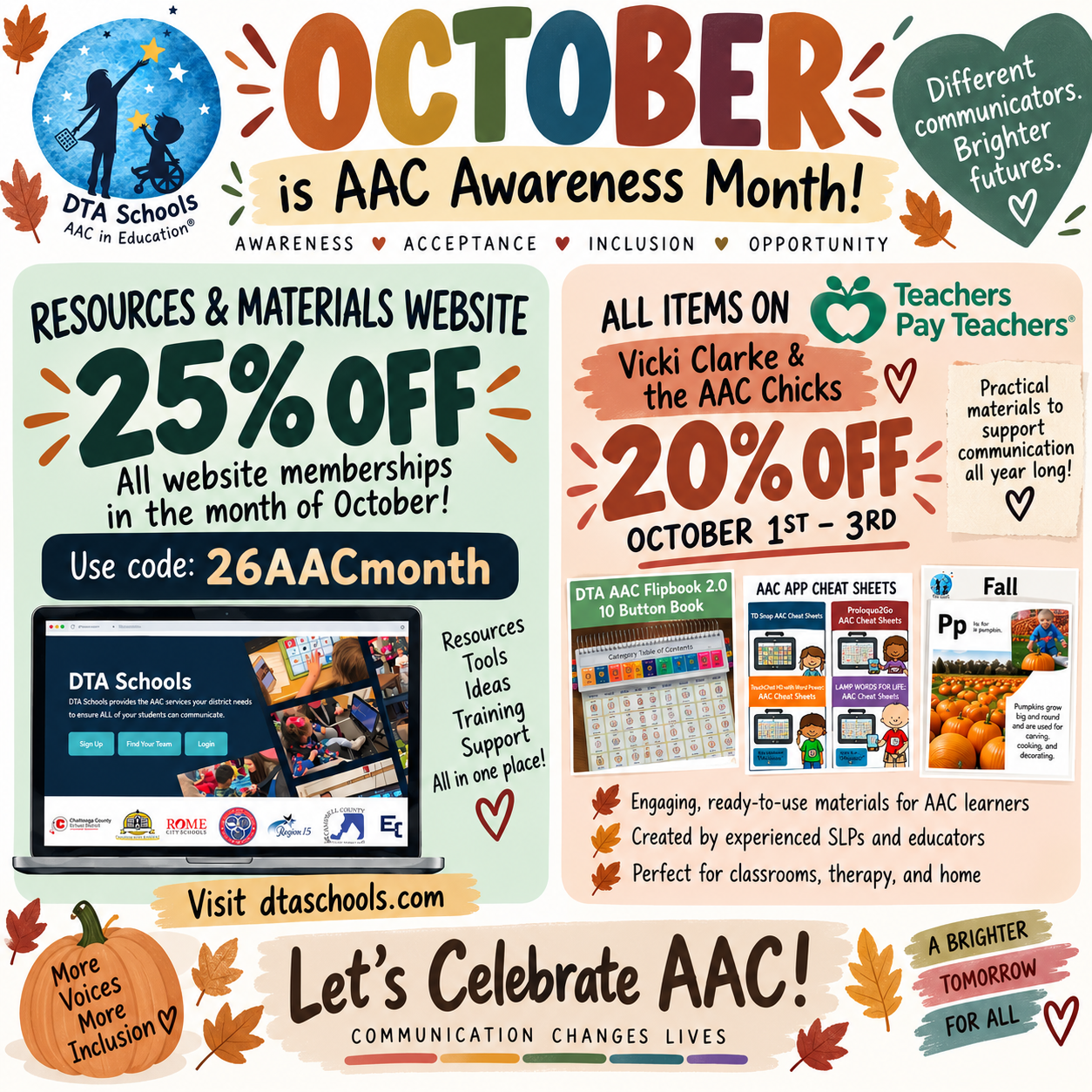
🍂 DTA Schools Resources & Materials Website — 25% OFF all website memberships for the entire month of October.
Use code 26AACmonth.
The website includes ready-to-use communication supports, activities, instructional materials, ideas, and training resources designed to help teams incorporate communication across the school day. Visit DTA Schools