AAC Access
Robust AAC: The Foundation for Learning, Literacy, and Lifelong Communication

Vicki Clarke
December 3, 2025


One of the most overlooked—and most critically important—roles of AAC is its power to develop language, not merely replace speech. This is especially true for students who have significant learning disabilities or complex communication needs. These students are often the ones who receive the most limited tools, the lowest expectations, and the fewest opportunities to grow as communicators. And yet, they are the students who most need consistent, well-structured language input.
When a nine-year-old is referred for an AAC evaluation, it is extremely common to find expressive language skills functioning at the level of an infant or toddler—fewer than 20 words, one-word messages, and limited flexibility in vocabulary. Too often, this gap is attributed solely to cognitive challenges. But decades of research—and every bit of clinical experience—tell us something very different:
Language does not develop in isolation from cognition. They grow together.
And when a child is not given the tools to express language, they cannot develop language.
Children with significant learning disabilities frequently experience this exact problem. When they are provided only the simplest of communication boards, only nouns, or only a few high-frequency phrases, their ability to develop more complex language is directly restricted. We end up confusing lack of opportunity with lack of capacity—a mistake that harms children every day.
A nine-year-old—any nine-year-old—deserves access to:
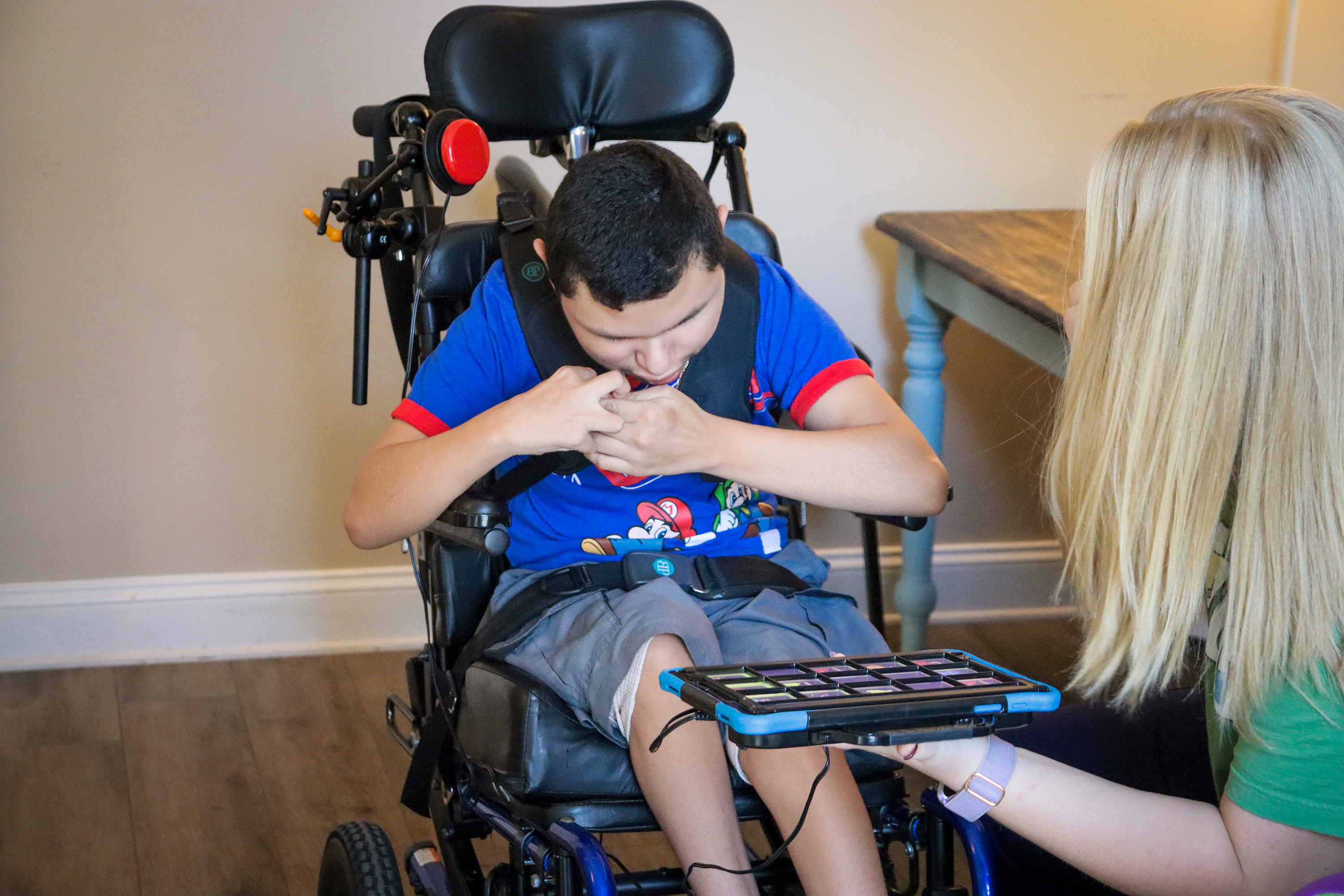
If we hand that same child a 15-location board with only a few pictures and phrases, we have effectively capped their development. We have given them a communication tool that reflects their current output—not their potential, not their understanding, and certainly not the language they need for school, friendships, and life.
Providing a simplified system does not “meet a student where they are.”
It KEEPS them where they are.
Students with significant learning disabilities are especially vulnerable to this problem. Because they learn differently, or more slowly, some adults assume they do not need—or cannot learn—more complex language. But these assumptions come from our own limitations, not theirs. Every child, regardless of disability label or classroom placement, benefits from exposure to rich language, repeated modeling, and opportunities to express increasingly complex ideas.
A robust AAC system is not optional.
It is ethical practice.
A system that supports language development must:
This is how we build communicators.
This is how we support cognitive development.
This is how we give students—all students—the opportunity to grow into the thinkers, readers, talkers, and citizens they are capable of becoming.
Every child deserves a communication system that reflects their true potential, not their current output. When we commit to robust AAC, we commit to building language, building learning, and building futures.